
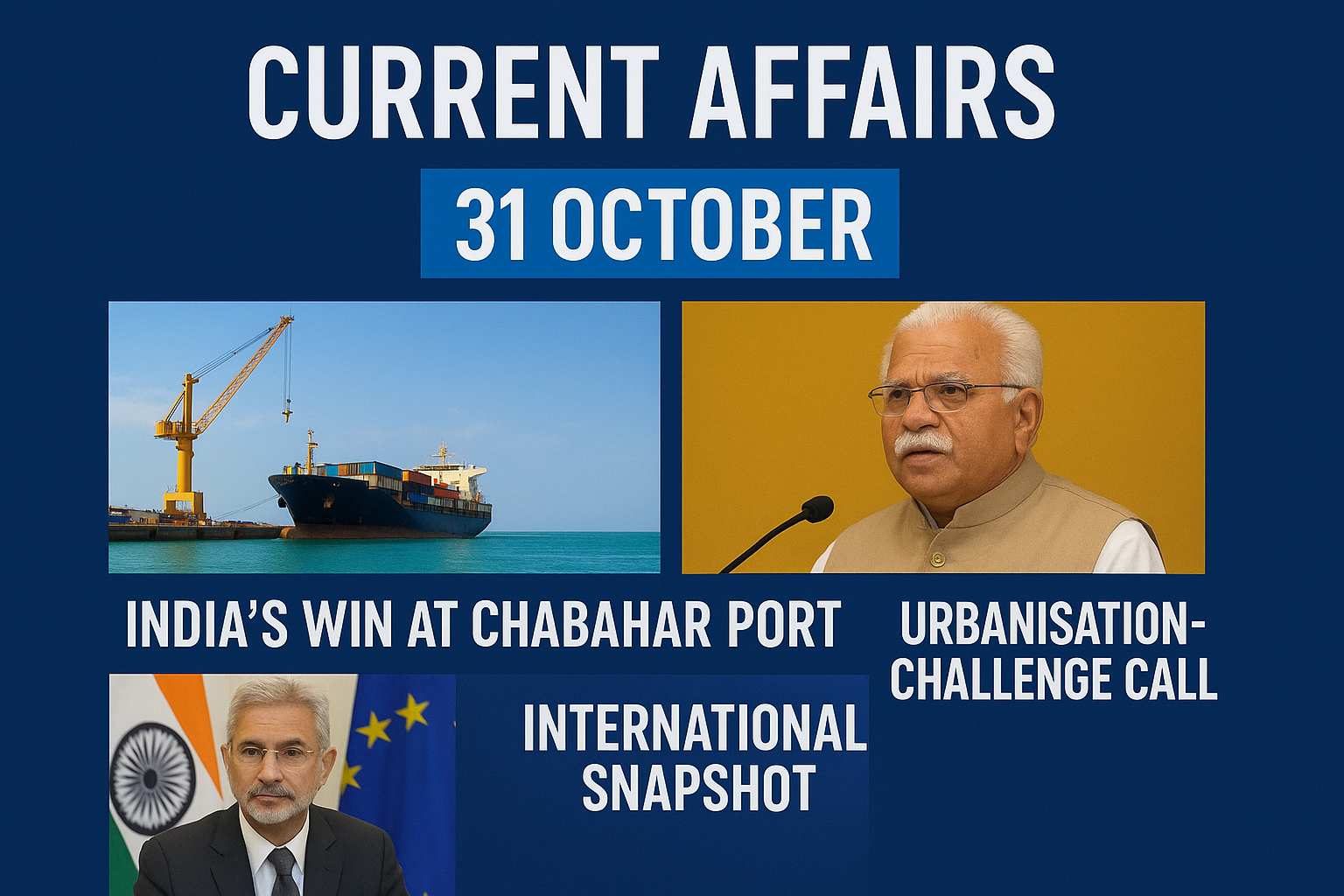

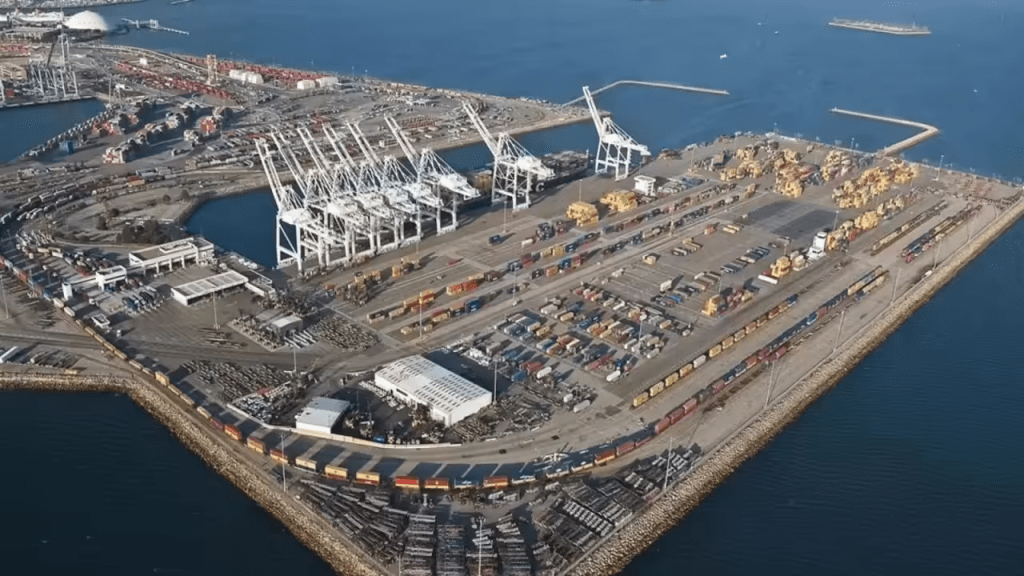
1. India’s strategic win at Chabahar Port
Chabahar Port in Iran, a key link for India to Afghanistan and Central Asia bypassing Pakistan, has received a six-month exemption from U.S. sanctions. The Times of India+1
This means India can continue development and operational activities at the port without the immediate threat of U.S. penalties — a diplomatic boost for India’s regional connectivity ambitions and a nod to the strategic value of that route. The exemption reflects both India’s growing geopolitical leverage and Washington’s recognition of Chabahar’s importance in regional trade and humanitarian logistics. The Times of India
Implication: India strengthens its access to Central Asia, reduces dependence on routes via Pakistan, and bolsters its role in the region’s economic-transport architecture.
2. Urbanisation-challenge call by Manohar‑Lal Khattar
The Union Minister for Housing & Urban Affairs underscored the urgency of co-operative federalism in managing India’s rapid urbanisation. The Times of India
He stressed that states must collectively tackle roads, drainage, mobility infrastructure, metro expansion and city-specific solutions. He noted India already has ~1,100 km of operational metro and ~900 km under construction, with the ambition to surpass the U.S. once 2,000 km is achieved. The Times of India
Implication: Key message for the coming urban policy: more state-centre collaboration, tailored city plans, and timely funding models rather than one-size fits all.
3. Diplomatic outreach: India-EU & Cyprus relations
S. Jaishankar, India’s External Affairs Minister, flagged strengthened ties with Cyprus and the European Union as strategic priorities. The Economic Times
He highlighted the India-Cyprus Joint Action Plan (2025-29) and underscored India’s intent to deepen cooperation in trade, investment and diplomacy with EU member states.
Implication: This move signals India is diversifying its global partnerships beyond traditional frameworks, aligning not just regionally (Indo-Pacific) but also westwards, reinforcing its global role.
4. International snapshot
- Alongside the above, global headlines include key developments such as the U.S. Senate adopting a resolution to undo parts of the previous administration’s global tariffs. business-standard.com+1
- Separately, in Afghanistan–Pakistan talks, a cease-fire extension is being discussed to stabilise cross-border tensions. www.ndtv.com
Implication: The global economic and security order remains in flux — trade policy shifts, border stabilisation efforts, and regional power realignments matter for India’s foreign-policy and economic calculus.
5. What to watch for
- How India leverages the Chabahar exemption: will it accelerate trade corridors or joint projects?
- The outcomes of the upcoming national urban conclave (as referenced by Khattar) and whether funding models evolve for states.
- Progress on the India-EU / India-Cyprus action plan: investment flows, technology partnerships and diplomatic cooperation.
- Global trade dynamics: tariff reversals, supply-chain shifts, especially as India simultaneously engages with West and East.
Overall, the day reflects India navigating multiple fronts — diplomacy (US, Iran, EU), infrastructure (urbanisation), and strategic connectivity (Chabahar). Each of these echoes the larger themes of “India as a rising global actor” and “bridging internal development with external partnerships”.
Would you like a deeper dive into any of these (for example: Chabahar port details, metro-network stats, or India-EU strategy)?