

Current affairs as On 6 November 2025, meanwhile, major developments unfolded across India and the world. In particular, India’s focus on corporate governance reforms followed the Tata Group’s internal dispute, while at the same time, Telangana pushed to become an AI innovation hub through partnerships with global firms. Globally, markets reacted to mixed signals from the U.S. Federal Reserve on interest rates, furthermore, climate talks ahead of COP30 centered on financing green transitions. In the technology sector, Yamaha announced showcasing next-gen robotics at iREX 2025, thereby underscoring automation trends. Additionally, energy debates continued over green hydrogen and renewables as nations balanced industrial growth with sustainability goals.
India – Key Developments
1. Bihar Assembly Elections Phase I current affairs 6 november
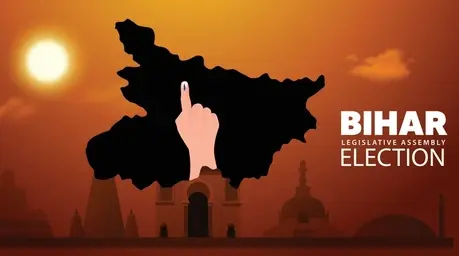
The state of Bihar went to polls in the first phase of its Assembly elections on 6 November 2025. According to the Election Commission of India (ECI), the election is being held in two phases — 6 and 11 November — for the 243-member Assembly. Vote‐counting is scheduled for 14 November.
This election is closely watched because of Bihar’s political weight and the outcomes’ implications for national politics. Preparation has been intense, and the bank holiday notifications in some states reflect the scale of electoral preparations.
Implications:
- A model for multi-phase polling in large states.
- The result will indicate the political mood in one of India’s populous states, possibly influencing national party strategies for 2026-27.
- The effectiveness of election logistics and voter turnout will also be under scrutiny.
2. Support for India’s Permanent Seat at United Nations Security Council current affairs 6 November
Sajith Premadasa, the opposition leader of Sri Lanka, during his visit to India, reiterated his support for India obtaining a permanent seat at the UN Security Council — describing it as recognition of “practical realities of international politics.”
Significance:
- India’s bid for permanent UNSC membership has long been part of its foreign‐policy agenda.
- Sri Lanka’s public backing strengthens India’s diplomatic case in regional forums.
- It underscores India’s growing geopolitical weight in the Indo-Pacific and Gulf region, and its role in multilateral institutions.
3. Corporate Governance: Tata Group Turmoil current affairs 6 november
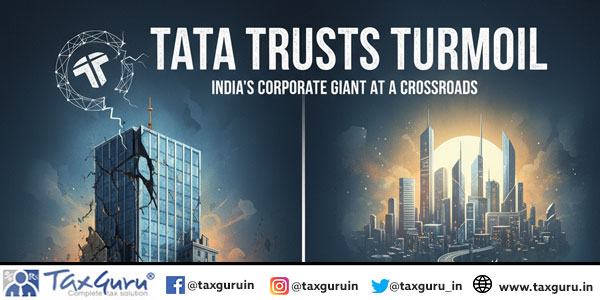
According to a Reuters piece, India’s iconic Tata Group is currently facing internal disputes. Specifically, the removal of a key board member of the Tata Trusts — which controls 66% of Tata Sons — has therefore triggered concern within the organization. Moreover, the dispute involves issues of representation and the exit of minority shareholder Shapoorji Pallonji. In response, the government has intervened, and regulators may consequently strengthen oversight of business governance.
Implications:
- Highlights challenges in family‐run conglomerates transitioning to modern corporate governance.
- Might influence investor confidence and regulatory reforms in India’s corporate sector.
- Could affect strategic decisions in sectors where Tata is significant (steel, aviation, automotive).
4. Science & Technology / Industry updated current affairs 6 november
The state of Telangana has recently launched an Artificial Intelligence Innovation Hub, aiming to position the state among the leading global AI hubs by 2035, through partnerships with premier institutes and tech firms.
Meanwhile, the Union Ministry of New & Renewable Energy has announced that the forthcoming International Conference on Green Hydrogen (ICGH 2025) will take place in New Delhi on 11–12 November, with participation from global stakeholders focused on scaling green hydrogen production and applications.
Overall, India is clearly doubling down on emerging technologies such as AI and green hydrogen in order to shape its future economy. Furthermore, the green-hydrogen push closely aligns with the nation’s climate and energy transition goals, while also encouraging international partnerships. Ultimately, such initiatives are expected to play a vital role in job creation, industrial policy, and technological self-reliance.
5. Banking and Holidays current affairs as on 6 november
Banks in certain Indian states were closed on 6 November because of the Bihar elections and the festival of Nongkrem Dance Festival in Meghalaya.
Observation:
- This reminds us of logistical complexities in India’s banking & administrative infrastructure when multiple events (elections, festivals) overlap.
- For citizens and businesses, knowing bank holiday calendars is important to avoid disruption.
Global Developments
1. India-Canada / India-Russia Diplomatic Moves current affairs 6 november
- India’s External Affairs Minister S. Jaishankar will attend the upcoming G7 foreign ministers’ meeting in Canada’s Niagara region on 11–12 November, including a bilateral meeting with Canadian counterpart Anita Anand.
- He is also set to visit Moscow in the third week of November to set the stage for the 23rd India-Russia Annual Summit (4–6 December) attended by Russian President Vladimir Putin.
Importance: - These engagements reflect India’s multi-aligned foreign policy: deepening ties with traditional partners while engaging major global groupings like G7.
- The Russia summit will likely cover defence, energy, and geopolitical coordination (e.g., in Central Asia/Indo-Pacific).
- Signals India’s diplomatic reach and willingness to engage with both Western and Eastern blocs.
2. Asia Region: Financial & Political Pressures updated current affairs 6 november
According to a recent report covering Indonesia, Laos, Myanmar, the Philippines, Singapore, and Thailand, the key concerns revolve around financial burdens, particularly as China-backed projects increasingly struggle to repay loans. Moreover, political instability and broader regional economic headwinds continue to compound these challenges.
Insights:
- Many Southeast Asian countries are facing debt stress from infrastructure projects — raising questions of sovereignty, economic sustainability and China’s influence.
- Regional stability holds implications for India’s Act East policy and maritime/land connectivity in the region.
3. Climate / Multilateral Environment current affairs 6 november
The upcoming 2025 United Nations Climate Change Conference (COP30), scheduled in Belém, Brazil (10-21 November), looms large in global agenda.
Among the issues: commitments from developed countries to scale finance, adaptation and mitigation efforts under the Paris Agreement. Live updates note that countries between 2020-25 promised $100 billion annually, but the baseline is now due for revision.
Why this matters:
- Climate negotiations will shape policies on energy, transport, green hydrogen, forestry and finance globally — major for India’s transition.
- The outcome could affect major emerging economies via technology transfer, financing and carbon markets.
Business & Economy
Industry Highlights updated current affairs 6 november
- In the field of technology and industry, meanwhile, Yamaha Motor Co., Ltd. recently announced that it will showcase its next-generation transport and robotics solutions at the upcoming International Robot Exhibition (iREX 2025) in Tokyo (3–6 December). Furthermore, this move clearly underscores global firms’ ongoing push toward automation, smart factories, and advanced mobility.
- Takeaway: Yamaha’s participation therefore highlights the accelerating global trend of integrating robotics and intelligent systems into industrial innovation.
- India’s push into AI and green hydrogen, meanwhile, must be seen within the context of global tech and industrial shifts. Indeed, automation, robotics, and advanced manufacturing are increasingly expected to drive competitiveness across sectors.
- As noted, the Tata Group’s governance issues are therefore shaking investor confidence and further raising questions about the broader corporate structure in India. Moreover, corporate governance issues are closely intertwined with macro-economic performance; indeed, a strong business environment ultimately requires transparency, investor trust, and regulatory clarity.
Finance & Banking updated current affairs 6 november
- The earlier note on bank holidays is a micro-economic detail but reveals how non-economic events (elections, festivals) impact banking, liquidity, and finance operations.
- No major macroeconomic numbers (e.g., GDP, inflation) were highlighted in today’s headlines — but the underlying issues of governance, infrastructure, technology and geopolitics will feed into future economic health.
Social, Environment & Technology
Environment / Climate current affairs 6 november
- The push for green hydrogen (ICGH address above) is part of the larger climate agenda gearing toward the COP30 talks.
- India’s various states are also promoting technology hubs (AI, smart manufacturing) that tie into sustainability: for example, smart factories are meant to be more resource-efficient (see Yamaha’s industrial automation release).
- The news also mentioned air-pollution issues in Delhi-NCR region, with AQI reaching very high levels early morning.
Observations: - Urban environmental challenges (air quality) remain acute in India; tech/industry solutions are part of the response but require systemic change (transport, energy mix, urban planning).
- Multilateral climate finance discussions (see above) matter for India’s adaptation and sustainable growth trajectory.
Technology & Innovation current affairs 6 november
- Notably, the AI hub in Telangana signals a significant state‐level effort to be globally competitive in emerging technology. Furthermore, partnerships with premier institutes and tech firms clearly point to an emphasis on research, talent, and industry collaboration.
- The Yamaha announcement shows how manufacturing and robotics are evolving: from linear conveyor modules to autonomous transport vehicles inside factories.
Implication: - India needs to accelerate its tech/innovation infrastructure, build skilled workforce, and link education & industry to harness these trends.
- May affect labour markets, skill development policy, and international collaborations.
Political & Governance Issues
Electoral Integrity current affairs 6 november
The live updates indicate allegations of electoral irregularities. For example, accusations of duplicate voters and questionable IDs in Haryana elections were raised by Rahul Gandhi, including claims of a foreign national photo used multiple times.
Significance:
- Electoral credibility is critical for democratic institutions. Such allegations, if substantiated, could erode public trust.
- The functioning of voter‐ID systems and software used by election bodies will come under review.
- These issues impact the legitimacy of upcoming polls (e.g., Bihar) and perhaps set a tone for future elections.
Corporate & Trust Governance (Tata case) current affairs 6 november
As noted, the dispute within Tata Group highlights tensions between governance structures, legacy trust holdings, and minority shareholders. Government and regulators are already stepping in.
Governance dimension:
- India’s push for greater transparency, better shareholder rights and higher global standards may gain impetus.
- It is also a reminder that while India has many large family-run conglomerates, the expectations and investor scrutiny have changed.
Foreign Policy & Multilateral Diplomacy current affairs 6 november
India’s diplomatic engagements (support for UNSC seat, participation in G7 and Russia summit) reflect a maturing global role.
- The UNSC support from Sri Lanka adds weight to India’s bid.
- The upcoming G7 and Russia summit signals strategic diplomacy: balancing ties with Western groupings and traditional partners.
Broader meaning: - India is increasingly seen as a major voice in global governance, not just regionally but in multilateral settings (climate, security, economy).
- Diplomacy now weaves in defence, technology, trade and connectivity alongside soft power.
STAY UPDATED WITH CURRENT AFFAIRS 6 NOVEMBER
- Bihar election results (14 November): Will indicate the political climate in India, impact party strategies, and potentially influence national parliamentary politics.
- COP30 outcomes: The conference in Brazil will be critical for climate finance, adaptation support, and how major emitters (including India) map their future.
- India-Russia Summit (4-6 December): Could yield significant deals in energy, defence and strategic cooperation.
- Corporate governance reforms: Whether the Tata case triggers broader regulatory action, changes in trust/holding structures, or investor responses.
- Technology/AI & green hydrogen rollout: How India’s state and federal policies convert into tangible infrastructure, manufacturing hubs, job creation and exports.
- Electoral reforms: Given the irregularity allegations, changes to voter-ID systems, software usage by the ECI and perhaps legal/policy responses may follow.
Updated current affairs & Big Picture
On 6 November 2025, the dominant themes were the intersection of politics, governance and technology:
- In India, major electoral exercises, corporate governance issues and technology initiatives are signalling transformations in democratic practice, business structures and industrial strategy.
- On the global front, India is asserting itself in multilateral diplomacy (UNSC bid, G7, Russia summit) while climate and technological transitions (AI, green hydrogen, robotics) loom large.
- Economically, while no blockbuster macro data emerged today, the signalling from industry (automation, innovation hubs) and governance (corporate trust disputes) suggest structural shifts.
- Environmentally, the build-up to COP30 and domestic air-pollution/states’ technology push reflect the dual urgency of climate mitigation and green industrialisation.
For India in particular, the confluence of elections, governance reforms and technology policy means that how well systems (electoral, corporate, industrial) respond to change will matter greatly for its future trajectory. Globally, the interplay of geopolitics, climate commitments and technological competition is shaping a new era of strategic competition and partnership — with India trying to position itself as a central actor rather than a passive participant.
Also read